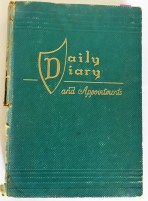
See this post for more information about my Grandmother’s diary.
April 9, 1943 – Friday
“One year ago today Bataan fell to the Japs. Still no word of Earl. Gladys Haskins sent a paper (Santa Fe) telling of Clark Lee being there. He told a lot about our boys. Can only hope & pray I will hear soon that Earl is safe. Felt pretty low. Warmer today. Some wind!“
Clark Lee wrote the book “They Call This Pacific”. A copy of which my grandmother had and my father gave to me. This is the article my grandmother was referring to in her entry. She created a scrapbook of newspaper articles about what was happening in the Philippines. I am thankful that my father gave me this scrapbook before he passed away.
Mon, March 29, 1943 – Page 1 – The Santa Fe New Mexican
See this post for more information about my Grandmother’s diary.
April 5, 1943 – Monday
“Harley got up early and went to St. Helena. Got his release from Dr and went to work this P.M. Ears still bothering him but got his 3rd class fitters rating so feels pretty good about that. Pretty fair day.“
See this post for more information about my Grandmother’s diary.
March 28, 1943 – Sunday
“Another beautiful day. Went to show – Abbott & Costello. Got restless and decided to go home. Tried to go to sleep early but not use to that. So read until about the usual time. Looked at a cottage in S.H. (St. Helena). Surely would like to rent but rent paid here until Apr 23. May get it after all.”
In 1943 my paternal grandmother, Frankie Ruth Fuller Pyatt Dourte, was living in St. Helena, California. At that time her only son (my father, Earl E. Pyatt) was in the Philippines at the start of the WWII, was part of the Bataan Death March and was being held as a POW. At the start of this diary, she had yet to receive word about his status. He was only 20 years old. She was married to my Dad’s step-father, Harley O. Dourte. They both worked at the Mare Island Naval Station. Harley had 3 sons of his own who were in the military. They moved to St. Helena because they were sure that when their boys came back they wanted to be near to where they would most likely return to the U.S. Her short, brief diary entries give a little glimpse of what her life was like during this time.
On the days she has an entry I will post it.
March 27, 1943 – Saturday
“Very nice day. Laid off work for first time from the island as Harley was sick with flu. Went to St. Helena to a show. Decided to stay with Carl as didn’t have to work Sunday.”
Carl was Harley’s brother who lived in St. Helena at the time.
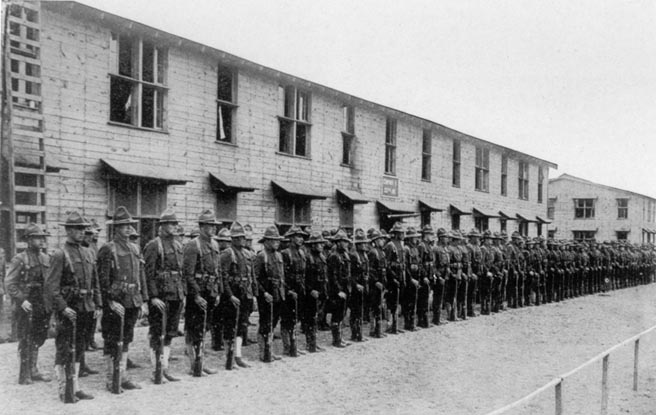
Charles Alfred Pyatt (1896-1985), my paternal grandfather, was a young man of 22 in 1918. World War I was in full force across the sea in Europe. He was inducted into the Army on May 28, 1918. He became part of the 88th Division, 349th Infantry, Company “M”.
The 88th Division originated and was trained at Camp Dodge outside of Des Moines, Iowa.
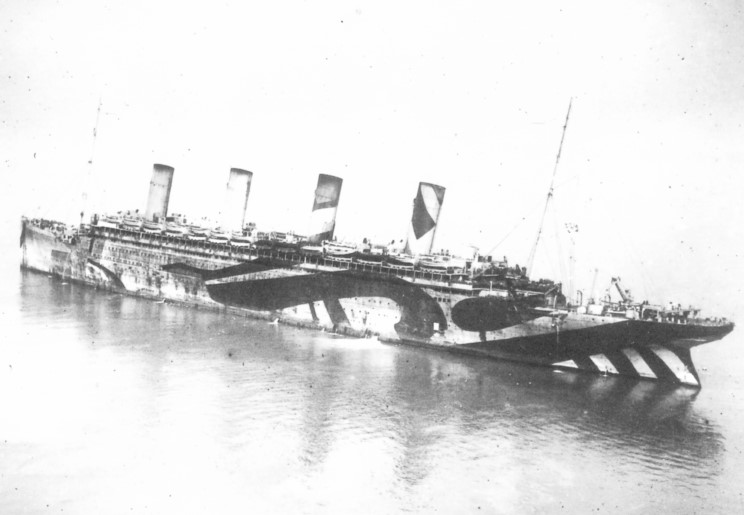
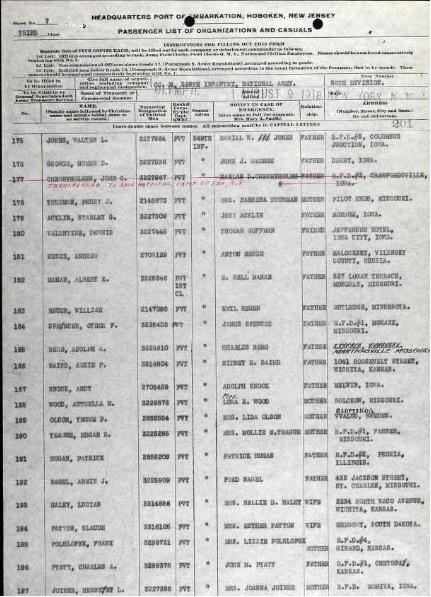
Company “M” of the 349th Infantry left the United States aboard the RMS Olympic (the Titanic sister ship) out of New York on August 9, 1918. They arrived in Southhampton, England on August 16, 1918. Over the next few days, they boarded ships to Le Harve, France.
RMS Olympic in “dazzle” camouflageCharles A. Pyatt on Passenger List
“The 88th Division although not permitted to come to France until the summer of 1918, trained and sent forty thousand men to France with other units to represent it gloriously there. Immediately on arrival in France, it was rushed into the line in a quiet sector. Without transportation, without equipment, the Division rendered a splendid account of itself in the Haute Alsace sector. By its activity there it prevented the Germans from withdrawing troops on the south to be sent against our forces in the Meuse Argonne offensive. By its activity in Haute Alsace and by its presence later as IV American Army Corps and Second American Army Reserve it permitted other American Divisions to be used directly with the First American Army in the Argonne Forest and along the Meuse.”
Excerpt from the book “The 88th Division in the World War 1914-1918”. (See reference below).
The war ended November 11, 1918. But the 88th would have to wait for transportation back until May 1919. The troops initially received more military training but commanders soon realizing this training would not benefit the troops once they returned to the United States. A new school was built for training troops in agriculture, automotive repair, carpentry and various trades that would prepare them for their return to civilian life. Many took this opportunity to see Europe with many leaves granted to the men allowing them to visit Britain, Spain and various other countries.
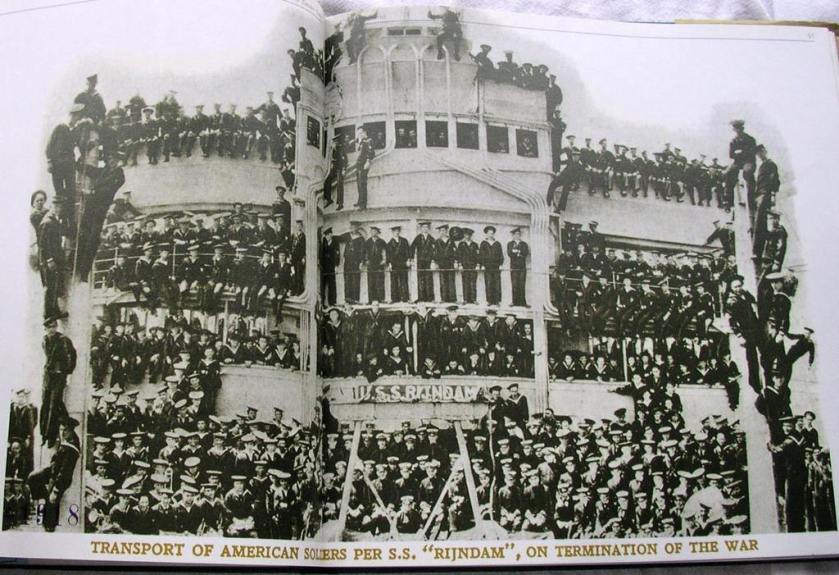
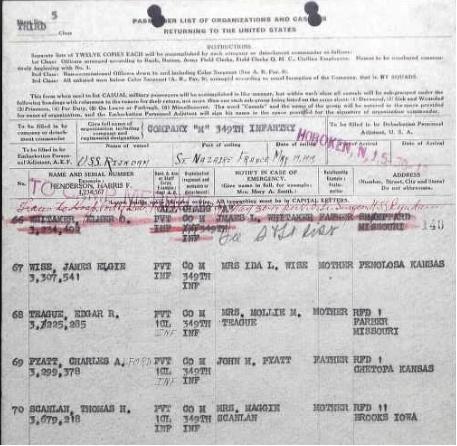
On May 19, 1919, the 349th Infantry was among the first of the 88th Division to leave France and return to the United States. Company “M” departed aboard the SS Rijndam at St. Nazaire, France and returned to Hoboken, New Jersey on May 30, 1919. Troops boarded trains back to Camp Dodge where they were returned to civilian status and many then returned to their previous lives.
Charles A. Pyatt on Rijndam passenger list
**I discovered this book on Google Books. Click here for the link to take you to this book. On page 135 I found my grandfather’s name and hometown listed among the roster of men in the 88th Division, Charles A. Pyatt, Chetopa, Kan. I also found another “Pyatt” on the roster, also in the 349th but in Company “F”. James W. Pyatt, Gladden, Mo. After researching I have discovered that James is Charles’ cousin. They were both on the Olympic together traveling to France and on the Rijndam on the way back. Somehow it gives me comfort knowing that my grandfather was with his cousin during this episode of his life.
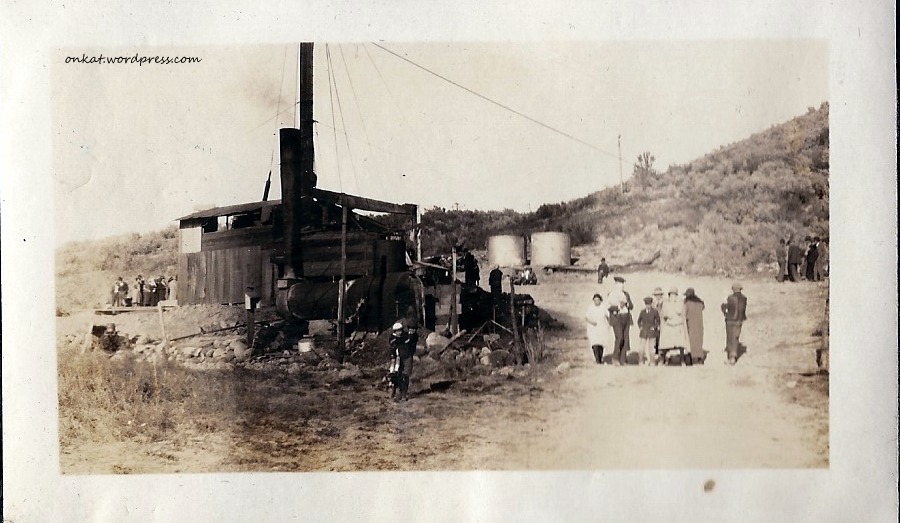
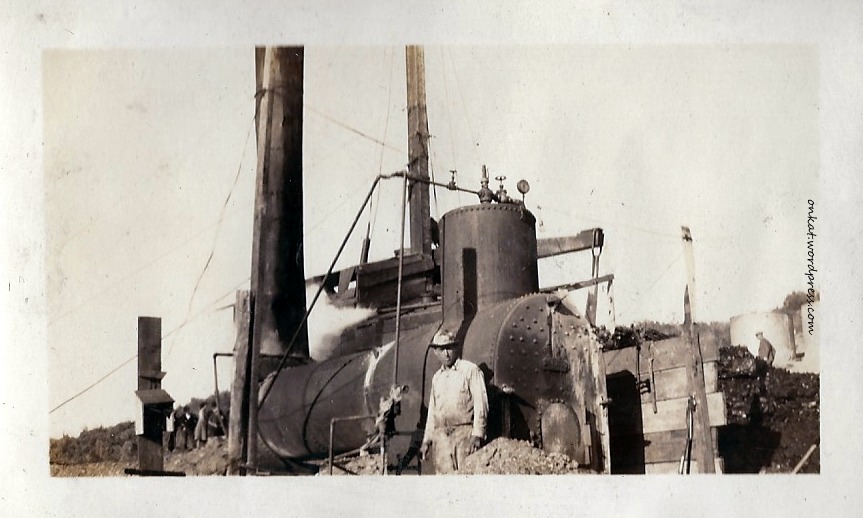
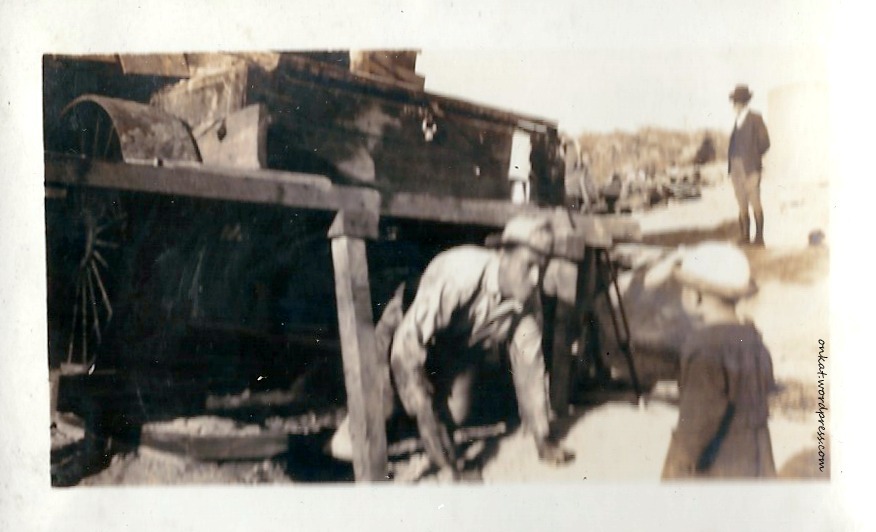
Navajo Reservation Oil Well circa 1926G-pa Pyatt (Charles Alfred Pyatt)G-pa Pyatt and Dad (Earl E. Pyatt)G-pa Pyatt and Dad
My father, Earl E. Pyatt, often talked about living on an Indian reservation when he was young. He always commented to us on how all they had to eat was pinto beans and creamed corn. He loved pinto beans but never really acquired a liking for creamed corn…hardly remember it ever being served at our house. My nephew was doing a report in school on Indians of the Southwest and my father sent the following information to him regarding his life there.
Excerpt from my Dad’s letter dated 8/31/2003 to Steven (his grandson) regarding life on the Navajo Indian Reservation.
“When I was about four years old my father worked for an oil drilling company and we lived in company housing on the Navajo reservation. This was in the Four Corner’s area west of Shiprock, NM along the Utah-Arizona border. I was the only kid in the oil camp and so the kids I could play with were all Navajo. They didn’t speak any English, but I did learn a few words in Navajo. I guess we used a sort of sign language and didn’t need words just to play.
I remember playing in and around their hogan and remember the smoky mesquite aroma from their clothing and inside where their mother cooked their meals. Another thing I remember was playing “stick horse” – running around after each other with a broomstick between our legs pretending it was a horse.
We lived there until I was school age and then moved to a town in New Mexico so I could go to school. Later, during World War II, I was in the New Mexico National Guard and had several friends there who were Navajo. In the combat area in the Philippines, they were in charge of telephone communications and passed information in Navajo so they would not be understood by the enemy. All the Navajo people I have known were very nice people and I enjoyed knowing them.”
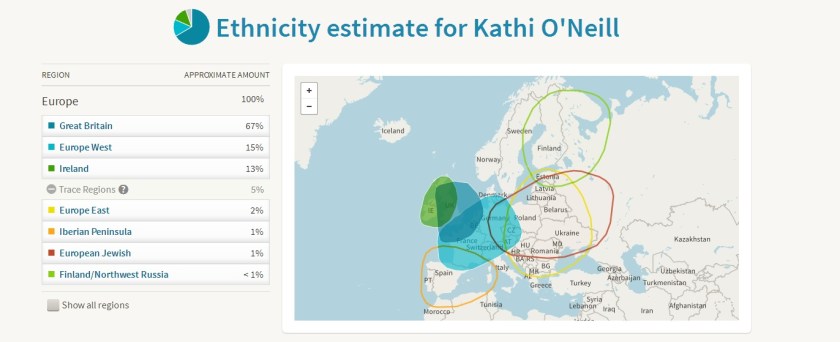
Finally bit the bullet and had my DNA analysis done through Ancestry.com. Two things I found interesting…one, that there is no Native American blood, as was often mentioned on my father’s side. And two, I wasn’t expecting that much Irish in me! But with a married name of O’Neill – I guess that’s a good thing. Have over 600 possible matches from others in the database, ranging from 4th cousins and closer. Closest being 2nd cousin. I have already connected with a 2nd cousin 1 x removed from my Grandpa Pyatt’s brother’s family! Will take some time to sort through them. My hopes with submitting my DNA is to see if I can break thru a brick wall with my 2nd great-grandfather, Needham Stephens, on my mother’s side. Will keep you up to date on any findings!
“There are two lasting bequests we can give our children: One is roots, the other is wings.” Teaching children values and giving them the opportunity to excel is essential to good parenting. However, I feel I must also provide my children (and myself) insight into the ones who came before us: our ancestors whose lives and stories have shaped us into who we are. This is my journey; these are their stories…

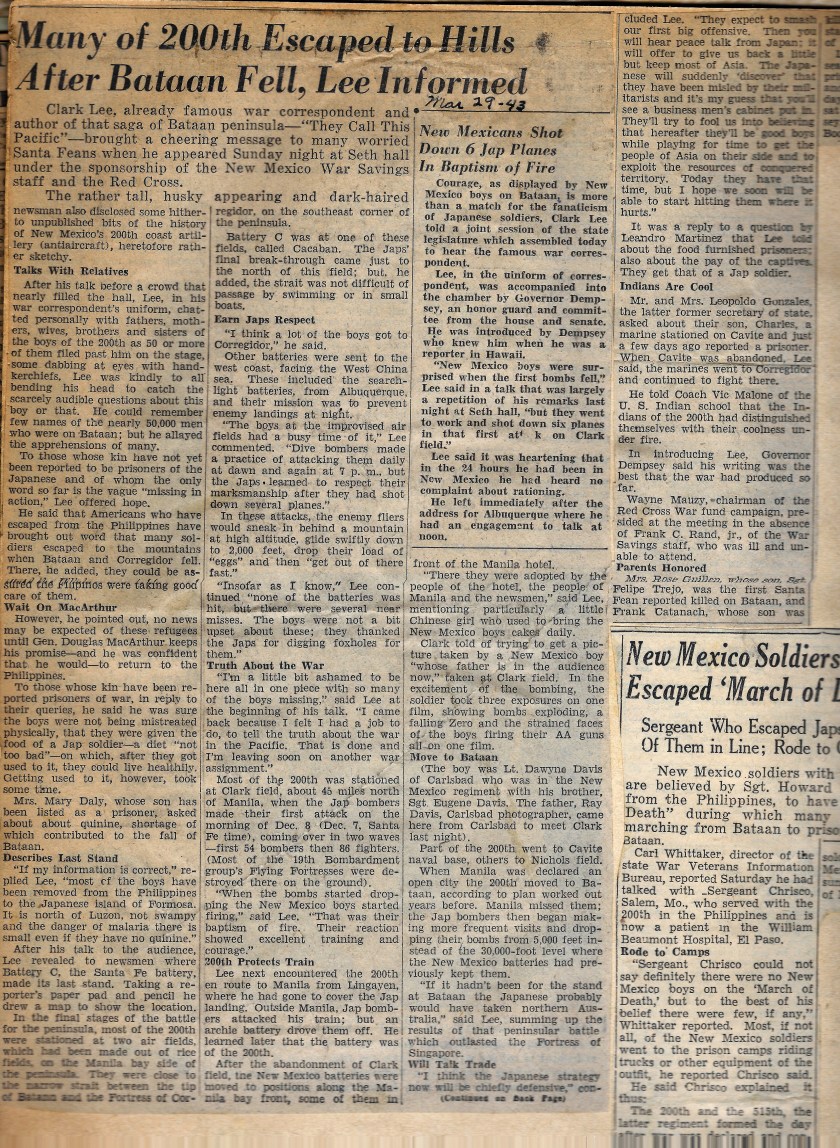 Mon, March 29, 1943 – Page 1 – The Santa Fe New Mexican






 Kathi O'Neill Genealogy